
Install the app
How to install the app on iOS
Follow along with the video below to see how to install our site as a web app on your home screen.
Note: This feature may not be available in some browsers.
You are using an out of date browser. It may not display this or other websites correctly.
You should upgrade or use an alternative browser.
You should upgrade or use an alternative browser.
Jackson State University News
- Thread starter bernard
- Start date
- Status
- Not open for further replies.

bernard
THEE Realist
JSU stadium talk at Jackson City Hall veers to UMMC cancer center push
What began as a Jackson City Council resolution supporting a new Jackson State University football stadium opened up into new details about UMMC’s long-planned cancer center across the street.
The resolution, introduced by Ward 3 Councilman Kenneth Stokes at the council's Tuesday, Nov. 18, meeting, carried no funding, zoning changes or policy shifts. It simply put the council on record as supporting Jackson State’s pursuit of a new football stadium, something university and city leaders have discussed for years but have never secured financing for.
During the discussion, Stokes linked the stadium question to another long-running ambition in the city: the University of Mississippi Medical Center’s effort to build a comprehensive cancer center. He said the future of Veterans Memorial Stadium — the massive, aging facility where JSU plays and which sits directly across from UMMC — has become part of the conversation around the cancer center’s location.
Last month, a Clarion Ledger investigation found the 75-year-old stadium has lost money in nearly every year since 2019, with operating costs outpacing revenues by almost $1.5 million. Keeping the facility running has required ongoing repairs and upgrades, even as JSU continues to lead the FCS in average home attendance. Lawmakers have also repeatedly failed to fund a new stadium.
Stokes said the city should help JSU decide where a future stadium might go — possibly on campus or downtown — so that both projects can continue moving forward.
“The cancer center is a step in the right direction for the state of Mississippi, for the city of Jackson and for Jackson State University,” Stokes said, adding that clarifying the stadium’s future would help unblock progress.
Mayor John Horhn then offered new information about the cancer center itself, saying UMMC has raised $60 million toward what he described as a $250 million capital campaign. He said the medical center plans to ask the Mississippi Legislature to match whatever is raised and bond out the remainder of the project.
Horhn said UMMC’s priority location is an area he called “the bowl,” just south of the former Schimmel’s building near the Hope Lodge, next to the stadium and its parking lots. In his quarterly meetings with UMMC leadership, Horhn said officials indicated they were “very, very close” to wanting to take possession of the stadium site and assist JSU in securing a new facility elsewhere.
What UMMC confirms — and what it won’t say
While Stokes and Horhn each tied the stadium’s future to UMMC’s ambitions, the medical center offered a narrower picture of what is actually underway and what it is willing to discuss publicly.UMMC declined to comment on any interest in Veterans Memorial Stadium. In an initial response to the Clarion Ledger, a spokesperson said the medical center had “no comment” on questions related to the stadium site.
However, UMMC confirmed other parts of what Horhn described. Patrice Guilfoyle, UMMC's director of communications, said the cancer center would be built across the street from the medical center near the Hope Lodge, aligning with the location Horhn referred to as “the bowl.” She confirmed the medical center has raised $60 million toward a $125 million philanthropic campaign for the project, but did not confirm Horhn’s comments about potential legislative matching funds, saying only that UMMC “doesn’t know what the Legislature will do.”
Vice Chancellor Louann Woodward was not available for an interview. But UMMC pointed to its October public update outlining the scope of the cancer center and its long-term effort to pursue National Cancer Institute designation. It is a multiyear process requiring major expansions in research and clinical infrastructure.
In that update Rod Rocconi, director of the Cancer Center and Research Institute, described NCI designation as a potential “game changer” for Mississippi and said UMMC is still “just leaving the blocks” in the race toward eligibility.
Rocconi said the philanthropic campaign’s early progress — including a $25 million lead gift from Sandy and John Black — has put UMMC “nearly halfway there” in less than a year. The $125 million campaign is intended to help fund construction of a new five-story Cancer Center and Research Institute in Jackson, expanding clinical care, research and statewide outreach for a state with some of the nation’s highest cancer mortality rates.
What the law says about the stadium
Guilfoyle also pointed to a state law that governs what happens to the stadium property if JSU ever moves its home games, adding another layer to why the site keeps surfacing in these discussions.A 2011 state law — House Bill 1158, passed by the Legislature and approved that year — helps explain why Veterans Memorial Stadium keeps surfacing in discussions about UMMC’s cancer center.
The law gives JSU control of the stadium only until it relocates its home football games. If the university plays its home games somewhere else in the future — meaning it builds or relocates to a different stadium — the law says the Veterans Memorial property “shall be transferred” to UMMC. The statute also requires both institutions to honor existing leases on the site and bars the use of eminent domain to take any leased interests.

JSU stadium talk at Jackson City Hall veers to UMMC cancer center push
A simple resolution turned into questions and some updates about one of Jackson’s most valuable pieces of property.
www.clarionledger.com
bernard
THEE Realist

Rod Paige, former U.S. education secretary and Houston ISD superintendent, dies at 92 | Houston Public Media
Paige was the first school superintendent ever to serve as secretary of education, a position he held under the George W. Bush administration for four years.
 www.houstonpublicmedia.org
Last edited:
bernard
THEE Realist
A former Jackson State University administrator's sex discrimination lawsuit against Mississippi's public university governing board can proceed despite members of the board attempting to dismiss the case, the U.S. Court of Appeals ruled in its opinion Wednesday, Dec. 10.
The U.S. Court of Appeals for the Fifth Circuit affirmed a decision by the U.S. District Court for the Southern District of Mississippi, finding that former Jackson State University Vice President Debra Mays Jackson adequately alleged that the board discriminated against her on the basis of sex under the Equal Protection Clause during the 2023 search for the university's next president.
The ruling does not decide if discrimination occurred. Instead, it means that Mays Jackson's claim is sufficient enough to return and continue in the federal district court.
Mays Jackson, who served as Jackson State's vice president and chief of staff since 2017, argued that despite her extensive qualifications and expressed interest for the presidency in 2023, she was passed over in favor of the Mississippi Institutions of Higher Learning's Deputy Commissioner and Chief Administrative Officer Marcus Thompson.

The U.S. Court of Appeals for the Fifth Circuit affirmed a decision by the U.S. District Court for the Southern District of Mississippi, finding that former Jackson State University Vice President Debra Mays Jackson adequately alleged that the board discriminated against her on the basis of sex under the Equal Protection Clause during the 2023 search for the university's next president.
The ruling does not decide if discrimination occurred. Instead, it means that Mays Jackson's claim is sufficient enough to return and continue in the federal district court.
Mays Jackson, who served as Jackson State's vice president and chief of staff since 2017, argued that despite her extensive qualifications and expressed interest for the presidency in 2023, she was passed over in favor of the Mississippi Institutions of Higher Learning's Deputy Commissioner and Chief Administrative Officer Marcus Thompson.
Former JSU VP's sex discrimination lawsuit against IHL to move forward
U.S. Court of Appeals allows former JSU administrator's sex discrimination lawsuit against Mississippi's public university governing board to proceed.
www.clarionledger.com
bernard
THEE Realist
IHL approves profile, waives policy in Jackson State president search
The Mississippi Institutions of Higher Learning voted to approve a leadership profile in the presidential search at Jackson State University.
The approved leadership profile was not immediately made publicly available.
During a special meeting on Thursday, Dec. 18, the IHL Board of Trustees also voted to waive a policy restricting an interim president from submitting their name as a candidate for the permanent position.
The current interim president is JSU Provost and Vice President of Academic Affairs Denise Jones Gregory, who stepped into the role in April following former President Marcus Thompson's resignation.
Interim presidents have campaigned for permanent positions in the past. Most recently, Elayne Hayes-Anthony, who served as interim president for eight months in 2023 between former President Thomas Hudson and Thompson, publicly advocated to stay in the role permanently.
Hayes-Anthony did not make it past the initial interview rounds in the national search for a new president.
Last edited:
bernard
THEE Realist
JSU faces third lawsuit related to presidential choices
Another lawsuit has emerged in the aftermath of presidential hires at Jackson State University.
Jerome Tinker, who serves in a leadership position in JSU’s Alumni Affairs office, is suing former president Marcus Thompon and the university in federal court for being turned down for the position of office director.
The lawsuit, filed Dec. 12, represents one side of a legal argument. It says Thompson instructed Monica Lewis, then interim vice president of institutional advancement, not to select Tinker as the interim director of Alumni Affairs or for the permanent post even though as alumni engagement officer he was second in command. The lawsuit alleges Thompson’s motivation was retaliation because Tinker had reported the “unlawful conduct toward a female employee” by Thompson’s predecessor, Thomas Hudson.
“We are aware of the lawsuit and do not comment on pending litigation,” said John Sewell, communications director for the Mississippi Institutions of Higher Learning Board of Trustees, which oversees the state’s eight public universities.
Thompson could not be reached for comment.
The lawsuit alleges that Thompson, who was then working for IHL, was tasked with investigating the allegations against Hudson. It identifies Thompson as Hudson’s “friend and confidante.”
“Thompson did not interview the female employee during his so-called investigation. Thompson also was aware of Tinker’s complaint to IHL that Hudson attempted to dissuade him in January of 2023 from suing Hudson and JSU retaliation,” according to the lawsuit.
Another lawsuit has emerged in the aftermath of presidential hires at Jackson State University.
Jerome Tinker, who serves in a leadership position in JSU’s Alumni Affairs office, is suing former president Marcus Thompon and the university in federal court for being turned down for the position of office director.
The lawsuit, filed Dec. 12, represents one side of a legal argument. It says Thompson instructed Monica Lewis, then interim vice president of institutional advancement, not to select Tinker as the interim director of Alumni Affairs or for the permanent post even though as alumni engagement officer he was second in command. The lawsuit alleges Thompson’s motivation was retaliation because Tinker had reported the “unlawful conduct toward a female employee” by Thompson’s predecessor, Thomas Hudson.
“We are aware of the lawsuit and do not comment on pending litigation,” said John Sewell, communications director for the Mississippi Institutions of Higher Learning Board of Trustees, which oversees the state’s eight public universities.
Thompson could not be reached for comment.
The lawsuit alleges that Thompson, who was then working for IHL, was tasked with investigating the allegations against Hudson. It identifies Thompson as Hudson’s “friend and confidante.”
“Thompson did not interview the female employee during his so-called investigation. Thompson also was aware of Tinker’s complaint to IHL that Hudson attempted to dissuade him in January of 2023 from suing Hudson and JSU retaliation,” according to the lawsuit.

In_The_662
Deeeeep In The Delta.....
bernard
THEE Realist

Why the push for new Jackson State stadium ‘has legs’
For multiple years running, a bill was introduced in an effort for Jackson State University to have a new multi-purpose football stadium.
 www.wlbt.com
bernard
THEE Realist


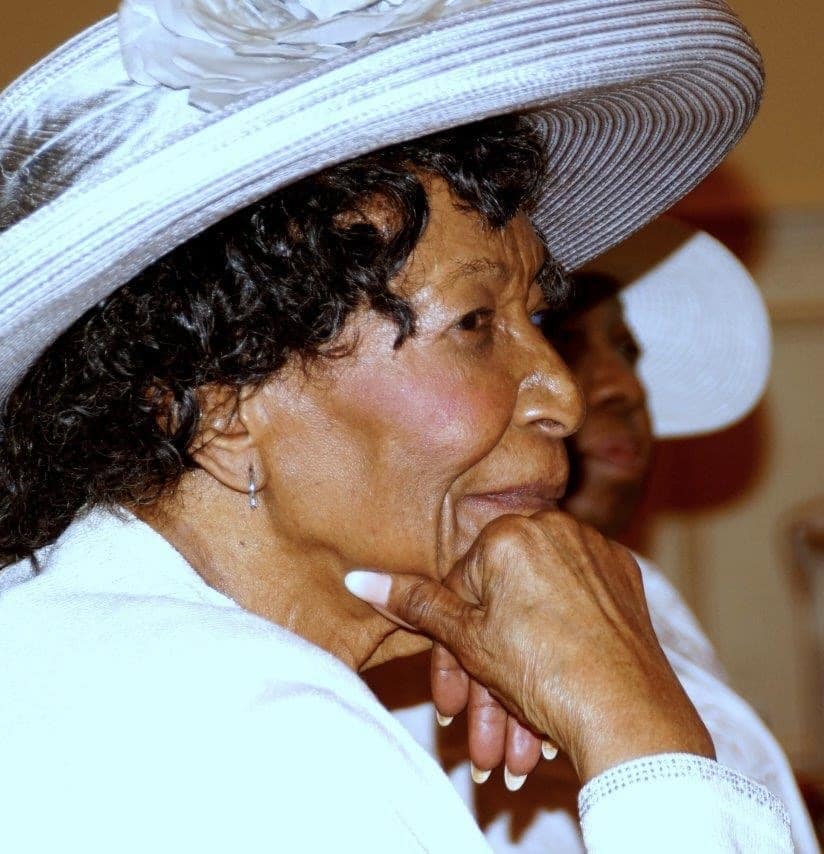
Dr. Lelia Rhodes and her rare book are back in the spotlight – Jackson Advocate
JANS – In anticipation of Jackson State University’s sesquicentennial (150th anniversary) in 2027, Jackson State University: The First Hundred Years,
 jacksonadvocateonline.com
bernard
THEE Realist

Available for the first time in decades, the story of the spirit, culture, and excellence that define Jackson State University
Before it was Jackson State University®, it was Natchez Seminary, a school built on a vision of education and empowerment. In 1877, H. P. Jacobs and Black ministers from the Mississippi Baptist Missionary Convention, in partnership with the American Baptist Home Mission Society, founded Natchez Seminary to educate newly freed Black students. That institution grew into Jackson State University, a powerhouse of education, culture, and progress.
For decades, JSU’s first official history was available only to those who could find a rare copy. Now, this landmark work is back. A story of resilience and triumph, Jackson State University: The First Hundred Years, 1877-1977 reflects the broader Black American journey, showing progress against the odds. It is a must-read for alumni and students. The book is also a vital researcher’s resource for scholars studying historically Black colleges and universities, civil rights, and Black education.
In anticipation of JSU’s sesquicentennial (150th anniversary) in 2027, Jackson State University: The First Hundred Years, 1877-1977 by Lelia G. Rhodes is available again for scholars, alumni, and anyone interested in the legacy of historically Black colleges and universities.

Jackson State University
Before it was Jackson State University®, it was Natchez Seminary, a school built on a vision of education and empowerment. In 1877, H. P. Jacobs and Black ministers from the Mississippi Baptist Missionary ...
 www.upress.state.ms.us
bernard
THEE Realist
JSU features personal items of famed Mississippi author Margaret Walker Alexander in new Smithsonian exhibit
By William H. Kelly III
(JACKSON, Miss.) — Jackson State University (JSU) is expanding its cultural reach as a partnering institution with “At the Vanguard: Making and Saving History at Historically Black Colleges and Universities.” This special exhibit highlights rare collections from five HBCUs, including JSU’s Margaret Walker Center (MWC). It will feature Margaret Walker Alexander’s, Ph.D., personal journals, the Elizabeth Catlett sculpture of Phillis Wheatley, and the typewriter Alexander used to produce notable works such as the revised ‘Jubilee’ manuscript.
“At the Vanguard affirms what Historically Black Colleges and Universities have long known and practiced—preserving history is central to our mission. Jackson State University is honored to contribute to this exhibition through the Margaret Walker Center, where lived experience, scholarship and cultural memory are preserved with care,” said JSU Interim President Denise Jones Gregory, Ph.D. “This moment recognizes the role HBCUs play in safeguarding the past and preparing future generations to study, interpret and carry that history forward.”
JSU features personal items of famed Mississippi author Margaret Walker Alexander in new Smithsonian exhibit - JSU Newsroom
By William H. Kelly III (JACKSON, Miss.) — Jackson State University (JSU) is expanding its cultural reach as a partnering institution with “At the Vanguard: Making and Saving History at Historically Black Colleges and Universities.” This special exhibit highlights rare collections from five...
 www.jsumsnews.com
bernard
THEE Realist
What to know about ESPN 'SportsCenter' live from Jackson State's campus
ESPN's "SportsCenter on Campus" series will broadcast live from Jackson State University on February 16.The event, held at the Lee E. Williams Athletics and Assembly Center, was rescheduled from an earlier date due to a winter storm.
The broadcast will feature interviews with men's basketball coach Mo Williams and band director Dr. Roderick Little.
This marks the first time "SportsCenter on Campus" has visited JSU, though other ESPN programs have previously been to Jackson.
ESPN's "SportsCenter" is taking a trip to Jackson State's campus.
As part of the "SportsCenter on Campus" series, ESPN's flagship program will stop by JSU for a live broadcast on Feb. 16. The event was initially scheduled for Feb. 2 but postponed due to the winter storm.
The broadcast will take place at Lee E. Williams Athletics and Assembly Center, with a pep rally happening before the show. Doors open at 9 a.m. CT. The pep rally begins at 10 a.m., and "SportsCenter" will go live at 11 a.m.
bernard
THEE Realist
Jackson State awarded $14.5 million NIH contract to extend Jackson Heart Study training center
JACKSON – Jackson State University has received a 10-year, $14.5 million federal contract to continue its Jackson Heart Study Graduate Training and Education Center, the university announced Tuesday.
The award comes from the National Heart, Lung, and Blood Institute and the National Institute on Minority Health and Health Disparities, both part of the National Institutes of Health. University officials said the funding renews Jackson State’s role in the long-running Jackson Heart Study collaboration, which they describe as the largest investigation of cardiovascular disease in African Americans.
Jackson State said it has received more than $25 million in NIH funding related to the study since 2013.
Interim President Denise Jones Gregory said the new award reflects the university’s ability to secure major federal research partnerships and support health outcomes for families.
Heart disease remains a leading cause of death in the United States, and African Americans face higher rates, according to the Centers for Disease Control and Prevention. The university said related conditions, including hypertension, obesity and diabetes, also disproportionately affect Black communities and contribute to cardiovascular risk.

Jackson State awarded $14.5 million NIH contract to extend Jackson Heart Study training center - Darkhorse Press
Interim President Denise Jones Gregory said the new award reflects the university’s ability to secure major federal research partnerships
 darkhorsepressnow.com
bernard
THEE Realist
The Board Search Committee, established in August 2025 to lead the search for a new president of Jackson State University and chaired by Trustee Dr. Steven Cunningham, will meet on Wednesday, February 18, 2026, at 10:00 a.m. Members of the Search Advisory Constituency, comprised of Jackson State University stakeholders and established by the Board of Trustees in November 2025, will also participate in this meeting.
bernard
THEE Realist
JSU Community,
Check out this story of Jackson State University alum Johnny Cotton! He has held a front row seat to the Tiger Football legacy since 1956. The retired history teacher proudly boasts that he has never missed a home game in the last 70 years.
Beyond witnessing the W.C. Gorden, Comegy, and the Coach Prime eras, it's that Tiger Pride that keeps this die-hard fan coming back to the Vet season after season.
- Status
- Not open for further replies.